GUIDE: Genres, Classification and Types of Board Games
Contents
1. How to classify board games properly
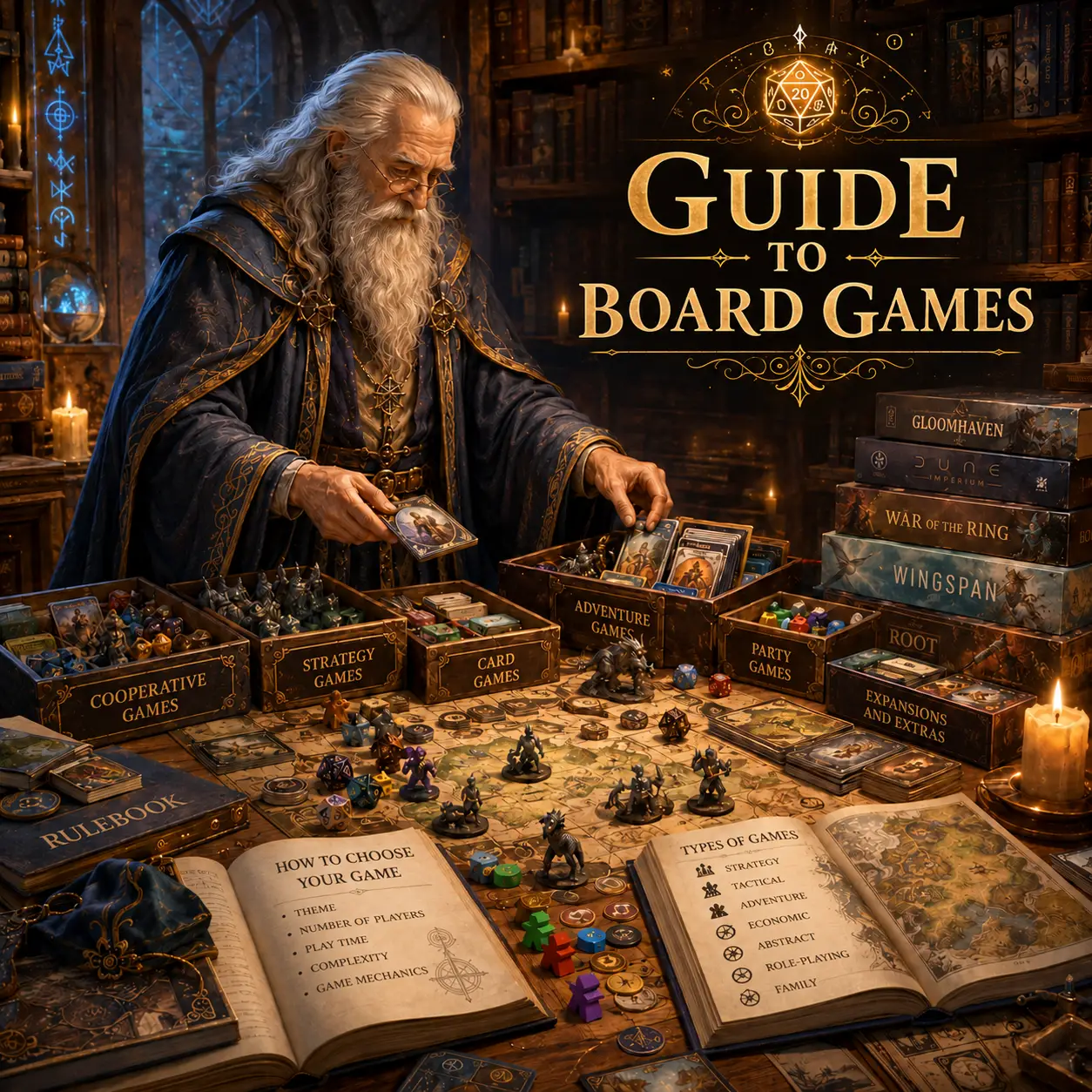
There is no single universal system for classifying board games. Shops and publishers group titles by audience and by the kind of experience on offer — family, strategy, cooperative, adventure, logic and card games — because that is what helps a buyer standing in front of a shelf.
BoardGameGeek, the reference point for the whole hobby, works differently. It separates categories, which describe the theme or the general character of a game, from mechanics, which describe the specific rules that shape the decisions players make. A single title can carry several of each.
Both systems are useful, and neither is complete on its own. In practice, describing a game accurately means naming more than one of these layers at the same time.
Do not confuse these concepts
- Theme is what the game is about — fantasy, space, the industrial revolution.
- Format of interaction is how players relate to one another — cooperative, competitive, semi-cooperative.
- Mechanic is the specific rule that drives decisions — worker placement, deck building, area control.
This is why the guide is split into separate sections rather than one list. The pages that follow cover each layer in turn: the main types of board games, the formats of interaction between players, the mechanics you will meet most often, and the themes and settings they are dressed in. If a term is unfamiliar, the glossary explains it in plain language.